
Introduction
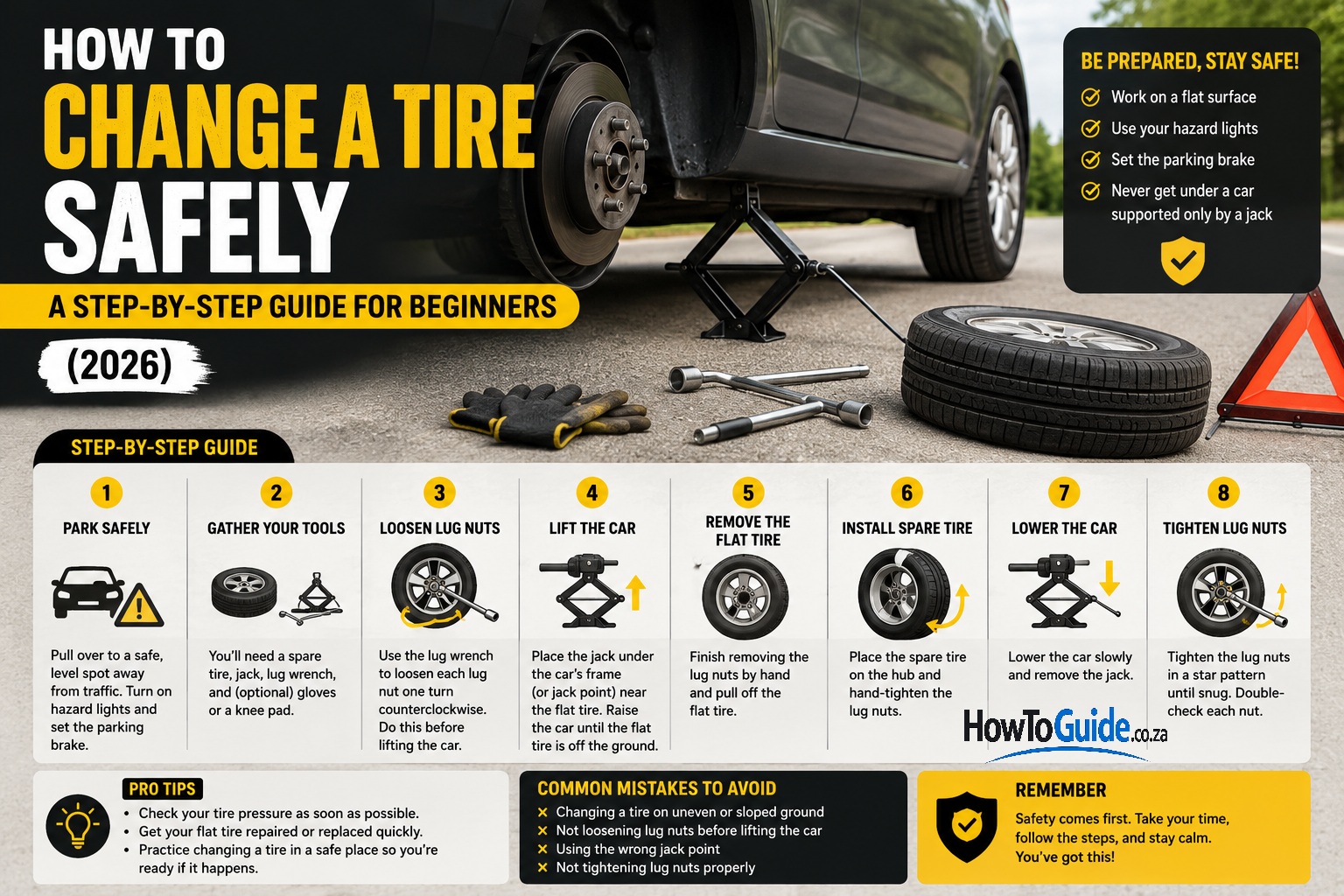
A flat tire (tyre) can happen when you least expect it. You could be driving to work, taking your children to school, or going on a road trip when suddenly your tire loses air. It can feel stressful, especially if it’s your first time dealing with it.
The good news is that changing a tire (tyre) is a basic skill anyone can learn. You don’t need to be a mechanic. With the right tools and a little patience, you can safely replace a flat tire and continue your journey.
Every driver should know how to change a tire. Even if you have roadside assistance, help may not always arrive immediately. Knowing what to do can save time, reduce stress, and keep you safe while waiting for professional assistance if needed.
In this guide, we’ll explain everything in simple English. You’ll learn what tools you need, how to change a tire step by step, common mistakes to avoid, troubleshooting tips, and answers to frequently asked questions.
Who This Guide Is For
This guide is ideal for:
- New drivers
- Parents transporting children
- Students and first-time vehicle owners
- Daily commuters
- Road trip travellers
- Anyone who wants to be prepared for a roadside emergency
It applies to most passenger vehicles, including:
- Hatchbacks
- Sedans
- SUVs
- Crossovers
- Small pickup trucks
If you drive a heavy commercial vehicle, truck, or bus, follow your manufacturer’s instructions or seek professional assistance.
Requirements
Before you begin, make sure you have the following:
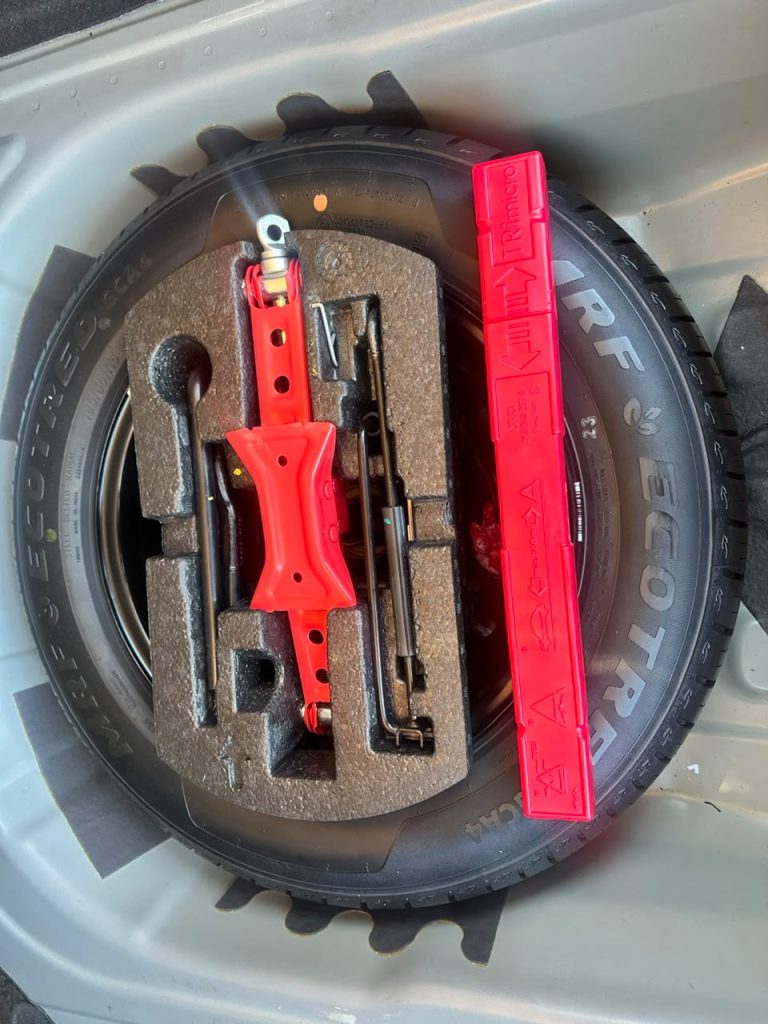
- A spare tire (tyre) with sufficient air pressure
- Vehicle jack
- Lug wrench (wheel brace)
- Vehicle owner’s manual
- Reflective warning triangle
- Reflective safety vest
- Flashlight (for night-time emergencies)
- Gloves (optional)
- Wheel chocks or large rocks (optional)
Important: Some newer vehicles, especially electric vehicles, no longer come with a spare wheel. Instead, they include a tyre repair kit or run-flat tyres. Check your owner’s manual so you know what your vehicle is equipped with before an emergency occurs.
Step-by-Step Guide
Step 1: Find a Safe Place to Stop
As soon as you realise you have a flat tyre:
- Slow down gradually.
- Do not brake suddenly.
- Switch on your hazard lights.
- Pull over onto a flat, stable surface away from traffic.
Avoid stopping on:
- Hills
- Mud
- Soft sand
- Blind corners
- Busy highways whenever possible
Safety Tip: If it is safe to drive a short distance to a better location, do so.
Step 2: Secure the Vehicle
Before lifting the vehicle:
- Apply the parking brake.
- Put an automatic transmission into Park (P).
- Put a manual transmission into First Gear or Reverse.
- Place wheel chocks behind the wheels remaining on the ground.
This prevents the vehicle from rolling.
Step 3: Remove the Hubcap
If your vehicle has a hubcap:
- Carefully remove it using the flat end of the lug wrench or a screwdriver.
- Store it safely.
Step 4: Loosen the Lug Nuts
Before lifting the vehicle:
- Turn each lug nut anti-clockwise.
- Loosen each nut about one turn.
- Leave them attached.
Avoid jumping on the wrench. Apply steady pressure instead.
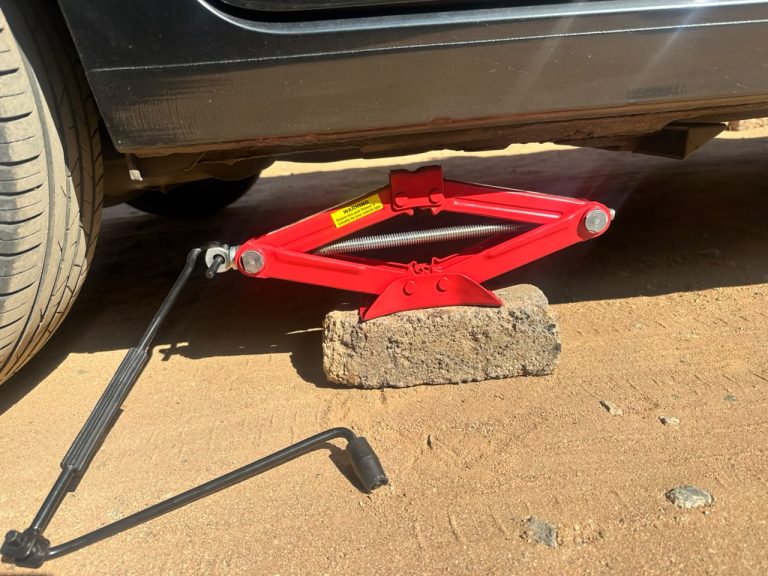
Step 5: Position the Jack
Locate the designated jack point underneath the vehicle.
If you’re unsure, check your owner’s manual.
Never place the jack beneath:
- Plastic trim
- Suspension components
- Vehicle floor panels
Incorrect placement can damage the vehicle or cause it to fall.
Step 6: Raise the Vehicle
Lift the vehicle slowly until the flat tyre is approximately 10–15 cm above the ground.
Watch carefully to ensure the vehicle remains stable.
If it begins to lean, lower it immediately and reposition the jack.
Step 7: Remove the Flat Tire
Remove the loosened lug nuts completely.
Keep them together in a safe place.
Pull the wheel straight toward you.
If it sticks, gently rock it side to side.
Step 8: Install the Spare Tire
Align the spare wheel with the wheel studs.
Push it firmly onto the hub.
Install the lug nuts by hand until they are snug.
Do not fully tighten them yet.
Step 9: Lower the Vehicle
Lower the vehicle until the tyre just touches the ground.
Tighten the lug nuts in a star (cross) pattern.
Lower the vehicle completely.
Remove the jack.
Step 10: Tighten the Lug Nuts
Use the lug wrench to tighten every nut firmly.
Continue using the star pattern.
If possible, later use a torque wrench and tighten the nuts according to the manufacturer’s recommended torque specification.
Step 11: Pack Away Your Equipment
Store:
- Flat tyre
- Jack
- Lug wrench
- Hubcap
- Warning triangle
Check the area carefully before leaving.
Step 12: Drive Carefully
If using a full-size spare tyre, you can generally continue driving normally until the damaged tyre is repaired.
If using a temporary (space saver) spare:
- Stay below 80 km/h unless your owner’s manual specifies otherwise.
- Avoid long journeys.
- Replace or repair the damaged tyre as soon as possible.
My Experience and Practical Insights
One of the biggest mistakes I have seen people make is waiting until they have a flat tyre before learning how to change one. During an emergency, stress levels are high, traffic may be passing close by, and every minute feels longer than it actually is.
A much better approach is to familiarise yourself with your vehicle while you’re safely at home. Locate the spare tyre, jack, and wheel brace. Read the relevant section of your owner’s manual and identify the correct jack points. Spending just 15 minutes preparing now can make changing a tyre much easier and safer when you actually need to do it.
Another practical tip is to check your spare tyre whenever you service your vehicle. Many people discover too late that their spare is flat or that important tools are missing.
Common Mistakes to Avoid
1. Forgetting the Parking Brake
Always apply the parking brake before lifting the vehicle.
2. Lifting Before Loosening the Lug Nuts
Loosen the wheel nuts while the tyre is still on the ground.
3. Jacking the Vehicle Incorrectly
Always use the manufacturer’s recommended lifting points.
4. Tightening the Lug Nuts Too Soon
Only fully tighten them after lowering the vehicle.
5. Driving Too Fast on a Temporary Spare
Temporary spare tyres are designed for short distances only.
6. Never Checking the Spare Tyre
Check the air pressure every month.
7. Continuing to Drive on a Flat Tyre
Doing so can damage:
- The wheel rim
- Suspension components
- Brakes
- Steering system
Repairs can become very expensive.
Troubleshooting
The Lug Nuts Won’t Move
- Apply steady pressure.
- Ensure you’re turning anti-clockwise.
- If they still won’t loosen, call roadside assistance.
The Spare Tyre Is Flat
Do not install it.
Call roadside assistance or a towing service.
The Jack Starts Leaning
Lower the vehicle immediately.
Move onto firmer, level ground.
Reposition the jack correctly.
The Wheel Is Stuck
Corrosion can cause the wheel to stick.
Gently rock the tyre side to side while pulling.
Never hit the wheel with excessive force.
You Cannot Find the Jack Point
Consult the vehicle owner’s manual before attempting to lift the vehicle.
Helpful Tips and Best Practices
- Keep an emergency roadside kit in your vehicle.
- Wear reflective clothing at night.
- Keep passengers away from the roadside.
- Never crawl underneath a vehicle supported only by a jack.
- Inspect your spare tyre regularly.
- Replace damaged tools immediately.
- Learn your vehicle’s jack points before an emergency.
- Consider carrying a portable tyre inflator.
Preparation can make a stressful situation much easier.
Frequently Asked Questions
1. How long does it take to change a tyre?
Most people can complete the job in 20 to 30 minutes.
2. Can I drive on a temporary spare tyre?
Yes, but only for a short distance and generally below 80 km/h.
3. What if I cannot loosen the lug nuts?
Use steady pressure.
If they remain stuck, contact roadside assistance.
4. Can I change a tyre in the rain?
Yes, but only if it is safe.
If visibility is poor or traffic is heavy, wait for assistance.
5. How often should I check my spare tyre?
At least once a month and whenever your vehicle is serviced.
6. Can I keep driving on a flat tyre?
No.
Driving on a flat tyre can permanently damage both the tyre and the wheel.
7. Do all cars come with a spare tyre?
No.
Many newer vehicles include a tyre repair kit or run-flat tyres instead.
8. Should I replace all lug nuts if one is damaged?
Replace any damaged or stripped lug nuts immediately. They help keep the wheel securely attached to your vehicle.
9. Is it safe to use a second-hand spare tyre?
Only if it is in good condition, has sufficient tread, and is free from cracks or damage.
10. Should I have my wheel nuts checked afterwards?
Yes.
It’s good practice to have the wheel nuts rechecked after driving approximately 50–100 km.
Official Resources and References
For vehicle-specific guidance, always consult:
- Your vehicle owner’s manual.
- Your vehicle manufacturer’s official website.
- Your roadside assistance provider.
- Local road safety authorities in your country.
These sources provide the most accurate instructions for your particular vehicle.
Conclusion
Learning how to change a tyre is one of the most valuable skills every driver can have. While roadside assistance is available in many places, there may be situations where help is delayed or unavailable.
By understanding the correct steps, using the right tools, and putting safety first, you can confidently deal with a flat tyre when it happens.
Take a few minutes today to locate your spare tyre, inspect your emergency tools, and read your owner’s manual. Being prepared now could save you time, money, and unnecessary stress in the future.
Disclaimer
This article is intended for general informational purposes only and should not replace the instructions provided in your vehicle owner’s manual. Vehicle designs and lifting points differ between manufacturers. If you are unsure of any step or the location is unsafe, contact roadside assistance or a qualified mechanic before attempting to change a tyre yourself.

.
About Pheto M
Pheto M is the founder and guide writer of HowToGuide.co.za, a practical information website created to help people find clear, useful and easy-to-understand guidance on everyday topics.
Pheto started HowToGuide.co.za after noticing a common problem: people often need help with important questions, applications, services and everyday decisions, but the information available online can be confusing, difficult to understand or scattered across different sources.
Pheto has experience and knowledge across several areas, including Business, Information Technology (IT), Education and Relationships. These areas have given her a practical understanding of different challenges people face in their personal, professional and everyday lives.
Today, she dedicates her time to researching, writing and updating practical guides designed to help readers understand information and take the right steps with greater confidence.
Her approach is simple: make complex information simple, confusing processes clear, and difficult situations easier to manage.
Through HowToGuide.co.za, Pheto aims to provide practical, accessible and helpful information that readers can use in their everyday lives.
Pheto values feedback from readers and is committed to continually improving the content on HowToGuide.co.za. If you have a question, suggestion, or would like to get in touch, you can email her at admin@howtoguide.co.za. She personally reviews reader feedback and aims to respond within 48 hours.
How to Register a Customary Marriage in South Africa Before the 31 August 2026 Deadline
August 9, 2026
Reading Time: 11 minutesRegister your customary marriage in South Africa before the 31 August 2026 deadline. Learn about required documents, family witnesses, and Home Affairs steps.
How to Explain Colors to a Blind Person or Child (2026): A Sensory Guide
July 26, 2026
Reading Time: 5 minutesExplaining color to someone who is blind might sound impossible, but colors are far more than just visual—they are felt, heard, tasted, and experienced. Discover practical, sensory-rich ways to introduce color concepts to blind children or adults using everyday touch, temperature, emotion, and sound.
How to Change a Tire (Tyre) Safely: A Step-by-Step Guide for Beginners(2026).
July 23, 2026
Reading Time: 6 minutesLearn how to change a flat tire (tyre) safely with this easy, step-by-step guide for beginners. Discover the essential tools you need, clear instructions to replace your tire, common mistakes to avoid, and key safety tips for the road.
How to Stop Gambling and Save Money in 2026: A Practical Step-by-Step Guide
July 21, 2026
Reading Time: 6 minutesLearn how to stop gambling and protect your income. Explore step-by-step methods to calculate your true gambling costs, replace bad habits, and build a lasting savings plan.
Deep Questions to Ask Your Partner for a Stronger Relationship (2026)
July 14, 2026
Reading Time: 5 minutesEvery relationship reaches a point where everyday conversations are no longer enough. Strong, unshakable bonds aren’t built by accident—they are built through honest conversations, trust, and a willingness to hear difficult truths. This comprehensive guide features 10 sections of intentional, deep questions designed to help couples move past surface-level talk, explore emotional intimacy, and establish regular “love meetings” for lasting connectio
How to Deal With Grief: A Simple Step-by-Step Guide to Healing
July 10, 2026
Reading Time: 6 minutesLearn how to deal with grief with this simple, step-by-step guide. Discover practical coping tools, understand your emotions, and find your way to a new normal.
How to Pray: A Step-by-Step Biblical Guide for Beginners (2026
July 8, 2026
Reading Time: 7 minutesWhether you are new to prayer or looking to deepen your spiritual life, this comprehensive, step-by-step guide breaks down how to pray using Bible-recommended patterns. From preparing your heart and mastering the Lord’s Prayer to applying the practical ACTS method, discover actionable steps, situational prayers, and a 5-minute daily cheat sheet to help you build a consistent and meaningful conversation with God.