
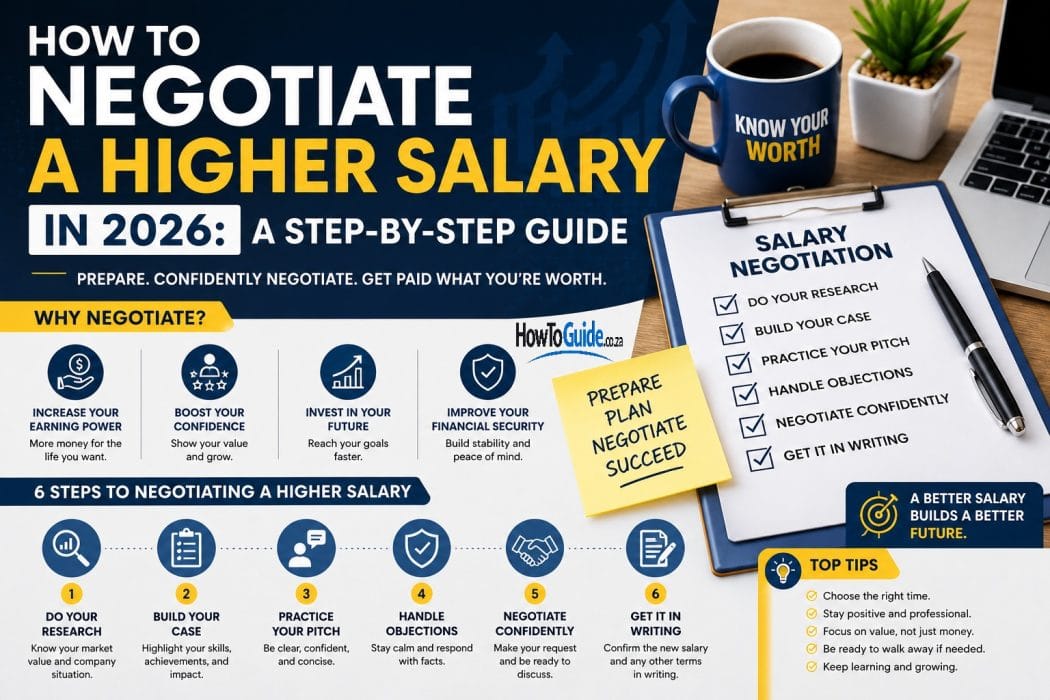
1. Introduction
Negotiating your salary can feel intimidating, especially if you’ve spent years proving your value to your employer. Perhaps you’ve consistently delivered results, mentored colleagues, taken on additional responsibilities, or exceeded performance targets—yet your salary no longer reflects your experience or today’s job market.
With increased salary transparency, evolving workplace expectations, and AI-driven recruitment, professionals are becoming more informed about their market value. Salary negotiation is no longer viewed as confrontational—it’s a normal part of career progression.
Whether you’re negotiating a raise during a performance review or discussing a new job offer, preparing your case properly can significantly improve your chances of success.
This guide explains how to negotiate a higher salary professionally, confidently, and strategically.
2. Who This Guide Is For
This guide is suitable for:
- Employees preparing for a salary review.
- Professionals receiving a new job offer.
- Individuals changing careers.
- Managers moving into leadership positions.
- Graduates negotiating their first professional salary.
- Anyone who believes their compensation no longer reflects their skills and experience.
3. Requirements
Before entering any salary negotiation, prepare the following:
- Recent salary research for your role.
- A list of measurable achievements.
- Knowledge of current market salary ranges.
- A clear understanding of your value to the employer.
- Your desired salary range.
- Confidence to discuss compensation professionally.
It also helps to know three important figures:
- Stretch Goal: Your ideal salary based on market research.
- Target Salary: The salary you’re hoping to achieve.
- Walk-Away Number: The minimum compensation you’re willing to accept.
4. Step-by-Step Guide
Step 1: Research Market Salaries
Before discussing salary, understand your market value.
Research salaries using multiple sources such as:
- Glassdoor
- PayScale
- LinkedIn Salary
- Recruitment salary guides
- Current job advertisements
- Industry reports
Compare salaries based on:
- Experience
- Qualifications
- Industry
- Geographic location
- Responsibilities
Avoid relying on a single salary website.
Step 2: Prepare Evidence of Your Value
Employers pay for results—not effort alone.
Document achievements using measurable outcomes.
Instead of saying:
“I improved sales.”
Say:
“I increased annual revenue by 15% through process improvements and client retention initiatives.”
Include:
- Revenue generated
- Costs saved
- Projects completed
- Productivity improvements
- Awards
- Customer satisfaction improvements
- Leadership responsibilities
Where possible, use numbers to demonstrate impact.
Step 3: Choose the Right Time
Timing can significantly affect your negotiation.
Good opportunities include:
- Annual performance reviews
- After completing a major project
- Following a promotion
- When your responsibilities have increased
- After receiving a formal job offer
For new employment opportunities, negotiate before accepting the offer.
Step 4: Start the Conversation Professionally
Begin on a positive note.
For example:
“Thank you for this opportunity. I’m excited about contributing to the team. Based on my research and experience, I was hoping we could discuss a salary closer to my market value.”
For existing employees:
“I’ve enjoyed contributing to the company’s success and would like to discuss how my compensation reflects my responsibilities and current market rates.”
Keep the discussion collaborative rather than confrontational.
Step 5: Support Your Request with Data
Present facts rather than opinions.
Discuss:
- Market salary benchmarks.
- Your measurable achievements.
- Additional responsibilities.
- Specialized skills.
- Certifications.
- Leadership contributions.
The stronger your evidence, the stronger your negotiation position.
Step 6: Listen Carefully
After making your request, allow the employer to respond.
Avoid interrupting.
Sometimes silence gives the other party time to consider your proposal.
Step 7: Negotiate the Entire Compensation Package
If the employer cannot increase your base salary, consider negotiating other benefits.
These may include:
- Performance bonuses
- Signing bonuses
- Additional annual leave
- Flexible working arrangements
- Hybrid or remote work
- Professional development funding
- Certification sponsorship
- Stock options or equity
- Earlier salary reviews
- Retirement contributions
Remember that total compensation extends beyond salary alone.
5. My Experience or Practical Insights
Here’s a more professional and polished version that reflects your genuine experience:
In my own career, I have successfully negotiated salary increases by focusing on the value I consistently delivered to the business rather than simply requesting more pay. During salary discussions, I presented clear evidence of my performance, highlighted my commitment to the company’s success, and demonstrated how my contributions had helped increase revenue and improve business outcomes.
I found that approaching the conversation with measurable results, professionalism, and confidence was far more effective than relying on emotion or personal circumstances. By showing how my work aligned with the company’s objectives and positively impacted its growth, I was able to build a strong business case for a salary increase.
From my experience, the most successful salary negotiations are based on preparation, performance, and proven value. Employers are more likely to consider a salary increase when you can clearly demonstrate the return on investment you bring to the organisation through your skills, achievements, and ongoing commitment.
6. Common Mistakes to Avoid
Negotiating Emotionally
Avoid letting frustration or disappointment drive the conversation.
Stay professional and focus on facts.
Not Researching Market Salaries
Without salary research, it’s difficult to justify your request.
Asking Without Evidence
Employers expect reasons supported by measurable achievements.
Being Too Aggressive
Negotiation should be collaborative, not confrontational.
Accepting the First Offer Immediately
Many employers expect some negotiation.
Take time to review the offer before accepting.
Negotiating Without Clear Goals
Know your:
- Ideal salary
- Target salary
- Minimum acceptable salary
Using Outdated Salary Information
Labour markets change quickly.
Always use recent salary data.
7. Troubleshooting
My employer says there is no budget.
Ask about:
- Future salary reviews.
- Performance bonuses.
- Additional leave.
- Flexible work arrangements.
- Professional development funding.
The employer rejected my salary request.
Ask what would be required to qualify for a future increase.
Request clear performance goals.
I’m nervous about negotiating.
Practice your conversation beforehand.
Rehearsing with a trusted friend or mentor can improve confidence.
I received another offer.
If appropriate, explain that you’ve received another competitive offer while remaining respectful and professional.
I accepted the offer too quickly.
You can still discuss salary later during your probation review or performance appraisal, although negotiating before acceptance is generally easier.
8. Helpful Tips and Best Practices
- Research current salaries before negotiating.
- Focus on value rather than personal financial needs.
- Use measurable achievements whenever possible.
- Practice your negotiation beforehand.
- Remain calm and professional.
- Listen carefully before responding.
- Be willing to negotiate the full compensation package.
- Avoid making ultimatums unless you’re prepared to follow through.
- Put any agreed changes in writing.
- Continue performing at a high level after negotiations.
9. Frequently Asked Questions
1. Should I always negotiate salary?
In many professional roles, yes. Employers often expect candidates to negotiate respectfully.
2. How much should I ask for?
Your request should be supported by current market research, your experience, and the responsibilities of the role.
3. What if my manager says there is no budget?
Consider negotiating bonuses, additional leave, flexible work arrangements, or an earlier salary review.
4. Can negotiating salary cost me the job?
Professional and reasonable negotiations rarely harm your chances. Aggressive or unrealistic demands, however, can negatively affect discussions.
5. Should I negotiate my first job offer?
Yes. If you have researched the market and can justify your request, it is reasonable to negotiate before accepting the offer.
6. Is it too late to negotiate after accepting an offer?
The best time is before acceptance, but future opportunities include probation reviews, annual performance reviews, promotions, or significant changes in responsibilities.
7. Should I mention another job offer?
Yes, if it’s genuine and relevant. Use it professionally without making threats or ultimatums.
8. Should I accept a counter-offer from my current employer?
Counter-offers can be worthwhile in some situations, but consider why you wanted to leave in the first place. Evaluate the overall opportunity, not just the salary.
10. Official Resources and References
For reliable salary information and career guidance, consult:
- Glassdoor – https://www.glassdoor.com
- PayScale – https://www.payscale.com
- LinkedIn Salary Insights – https://www.linkedin.com
- Michael Page Salary Guide – https://www.michaelpage.com
- Adecco Salary Guide – https://www.adecco.com
Use multiple trusted sources to benchmark salaries, and prioritise current data for your industry and location.
11. Conclusion
Negotiating a higher salary is about demonstrating your professional value, not simply asking for more money. By researching current market rates, documenting your achievements, choosing the right time, and approaching the conversation professionally, you can significantly improve your chances of securing better compensation.
Remember that salary is only one part of your overall remuneration. If a higher base salary isn’t possible, consider negotiating bonuses, additional leave, flexible work arrangements, professional development opportunities, or an earlier performance review. With preparation, confidence, and a collaborative mindset, salary negotiations can become an important step in advancing your career and long-term earning potential.
12. Disclaimer
Disclaimer: This article is for informational and educational purposes only and should not be considered legal, financial, employment, or career advice. Salary negotiations vary depending on your employer, industry, location, and individual circumstances. Always research current market conditions, review your employment contract, and seek advice from a qualified career professional or employment advisor if you require guidance specific to your situation.

.
About Pheto M
Pheto M is the founder and guide writer of HowToGuide.co.za, a practical information website created to help people find clear, useful and easy-to-understand guidance on everyday topics.
Pheto started HowToGuide.co.za after noticing a common problem: people often need help with important questions, applications, services and everyday decisions, but the information available online can be confusing, difficult to understand or scattered across different sources.
Pheto has experience and knowledge across several areas, including Business, Information Technology (IT), Education and Relationships. These areas have given her a practical understanding of different challenges people face in their personal, professional and everyday lives.
Today, she dedicates her time to researching, writing and updating practical guides designed to help readers understand information and take the right steps with greater confidence.
Her approach is simple: make complex information simple, confusing processes clear, and difficult situations easier to manage.
Through HowToGuide.co.za, Pheto aims to provide practical, accessible and helpful information that readers can use in their everyday lives.
Pheto values feedback from readers and is committed to continually improving the content on HowToGuide.co.za. If you have a question, suggestion, or would like to get in touch, you can email her at admin@howtoguide.co.za. She personally reviews reader feedback and aims to respond within 48 hours.
Limpopo Online Admission Status Check 2027: Step-by-Step (Grade R,1& 8)
September 2, 2026
Reading Time: 9 minutesApplications for Limpopo Online Admissions 2027 are officially closed. Learn how to log into the portal, track your child’s application progress, check placement status, and resolve common login issues.
ACTOM EHS Internship 2026: Requirements & Application Guide. Closed on 31 August 2026
August 9, 2026
Reading Time: 9 minutesLooking to start your career in Environmental, Health, and Safety (EHS)? Explore the ACTOM Power Transformers EHS Internship 2026 in Wadeville. Learn about qualification requirements, key responsibilities, necessary application documents, and step-by-step instructions on how to apply before the 31 August 2026 closing date.
How to Register for Gauteng School Admissions Grade 1 & Grade 8 Online (2027)
August 5, 2026
Reading Time: 5 minutesLearn how to register for Gauteng school admissions (Grade 1 & Grade 8) online for 2027. Step-by-step GDE portal guide, required documents, and practical tips.
How to Register for SACE Online in South Africa (2026): Complete Step-by-Step Guide
August 4, 2026
Reading Time: 6 minutesLearn how to register for SACE online in South Africa. Follow our 2026 step-by-step guide on eServices, required documents, fees, and application steps.
Limpopo Online Admissions 2027: How to Apply for Grade R,1 & 8 (Step-by-Step Guide): Closed 31 August 2026
July 26, 2026
Reading Time: 6 minutesA complete step-by-step guide on how to apply for public school placement using the Limpopo Department of Education Online Learner Admissions System (OLAS) for the 2027 school year. Learn about opening and closing dates, required documents, registration steps, and common mistakes to avoid.
UIF Graduate Internship Programme (2027-2029): How to Apply for 109 Internship Opportunities. Closed
July 25, 2026
Reading Time: 4 minutesApply for the UIF Graduate Internship Programme 2026 (109 Posts). Earn an R8,174.75 monthly stipend. Get application emails, Z83 details, and step-by-step instructions before 7 August 2026.
How to Negotiate a Higher Salary in 2026: A Step-by-Step Guide
July 21, 2026
Reading Time: 5 minutesFeel like your hard work and loyalty are going unrewarded? Discover 5 step-by-step strategies to research your market value, prepare a convincing pitch, and negotiate a higher salary or better benefits package with confidence in 2026.
ATNS Graduate in Training Programme 2026 (24-Month Paid Internship): Closed
July 15, 2026
Reading Time: 5 minutesApply for the ATNS Graduate in Training Programme 2026. Discover 24-month paid graduate opportunities in Business, Logistics, Aviation Security, Information Management, and OHS based in Johannesburg. Closing date: 28 July 2026
Seriti Engineering Learnership 2026 (NVC071/26GS): Apply Online:Closed
July 13, 2026
Reading Time: 5 minutesWant to launch your engineering career in the mining sector? Apply for the Seriti Engineering Learnership 2026 (Reference: NVC071/26GS) at New Vaal Colliery. Discover the minimum N2/Grade 12 requirements, available trades (Diesel Mechanic & Auto Electrician), and follow our step-by-step application guide before the closing date on 21 July 2026.