
1. Introduction
Let us be honest: when you are living on a SASSA grant, the idea of saving money can feel impossible. Whether you receive the SRD Grant, Older Persons Grant, Disability Grant, or Child Support Grant, almost every rand already has a purpose—buying food, paying for electricity, transport, school expenses, or medication.
However, saving is not about putting away hundreds of rand every month. It is about creating the habit of saving something, no matter how small.
Even saving R20, R50, or R100 each month can grow into an emergency fund that helps you pay for unexpected expenses like transport to a clinic, school shoes, electricity, or groceries.
This guide explains practical, realistic ways to save from your grant without sacrificing your basic needs. Every small amount you save today is an investment in your future financial security.
2. Who This Guide Is For
This guide is suitable for:
- SRD Grant beneficiaries
- Older Persons Grant recipients
- Disability Grant recipients
- Child Support Grant caregivers
- Foster Child Grant recipients
- Care Dependency Grant recipients
- War Veterans Grant recipients
- Anyone living on a limited monthly income
If you struggle to make your grant last until your next payment or want to build an emergency fund, this guide is for you.
3. Requirements
You don’t need a lot of money to start saving. Before you begin, you’ll need:
- A savings goal (R20, R50 or R100)
- A safe place to keep your savings
- A notebook or mobile phone to track your progress
- Self-discipline
- Patience and consistency
You can save using:
- A bank savings account
- A savings pocket on your banking app
- A locked container or envelope
- A trusted stokvel
Remember, consistency is more important than the amount you save.
4. Step-by-Step Guide
Step 1: Decide How Much You Want to Save
Before your grant is paid, decide exactly how much you’ll save.
For example:
- Save R20 if money is very tight.
- Save R50 if you receive the SRD Grant.
- Save R100 if you receive a larger grant.
Write your goal down and commit to it before payday.
Step 2: Pay Yourself First
As soon as your grant is paid:
- Put your savings aside immediately.
- Do this before buying groceries, airtime, or paying for transport.
- Treat your savings like your most important monthly bill.
Step 3: Keep Your Savings Separate
Once you’ve saved your money:
- Don’t spend it.
- Don’t lend it to friends or family.
- Only use it for genuine emergencies.
Safe places include:
- Bank savings pockets
- An envelope
- A locked container
- A trusted stokvel
Step 4: Find Small Ways to Save Every Month
Saving doesn’t always mean cutting essential expenses.
Look for opportunities to save by:
- Walking instead of taking a taxi.
- Drinking water instead of buying cold drinks.
- Buying groceries in bulk.
- Paying bills where transaction fees are lower.
- Planning shopping trips to avoid impulse purchases.
Small savings add up over time.
Step 5: Save Your Change
Keep a container at home.
Every time you receive:
- R1 coins
- R2 coins
- R5 coins
Put them into the container.
You’ll be surprised how quickly they accumulate.
Step 6: Save Unexpected Money
Whenever you receive extra money, such as:
- Birthday gifts
- Piecework income
- Refunds
- Cash gifts
Try to save at least half of it.
Step 7: Join a Savings Stokvel
Saving with others helps build discipline.
Benefits include:
- Accountability
- Community support
- Larger payouts
- Less temptation to spend
Step 8: Avoid Unnecessary Spending
Before buying something, ask yourself:
“Do I really need this?”
Waiting 24 hours before making a non-essential purchase often prevents impulse spending.
Step 9: Use Your Savings Wisely
Good reasons to use your savings include:
- School uniforms
- Electricity
- Medical emergencies
- Groceries
- Funeral expenses
- Emergency transport
Avoid using your emergency fund for:
- Alcohol
- Gambling
- Takeaways
- Cigarettes
- Luxury purchases
Step 10: Track Your Progress
Record your savings every month.
| Month | Saved | Total |
|---|---|---|
| January | R50 | R50 |
| February | R50 | R100 |
| March | R50 | R150 |
| April | R50 | R200 |
Seeing your progress helps you stay motivated.
5. My Experience or Practical Insights
One of the biggest myths about saving is that you need a large amount of money before it’s worth starting. In reality, successful saving is built on consistency, not the size of your deposits.
People who save even small amounts every month often develop stronger financial habits than those who wait until they have “extra money.” The truth is that, for most people, there is rarely money left at the end of the month. That’s why the principle of paying yourself first is one of the most effective ways to build long-term savings.
If you occasionally need to use your emergency fund, don’t view it as a setback. An emergency fund is designed for unexpected expenses. The important thing is to start saving again with your next grant payment or income.
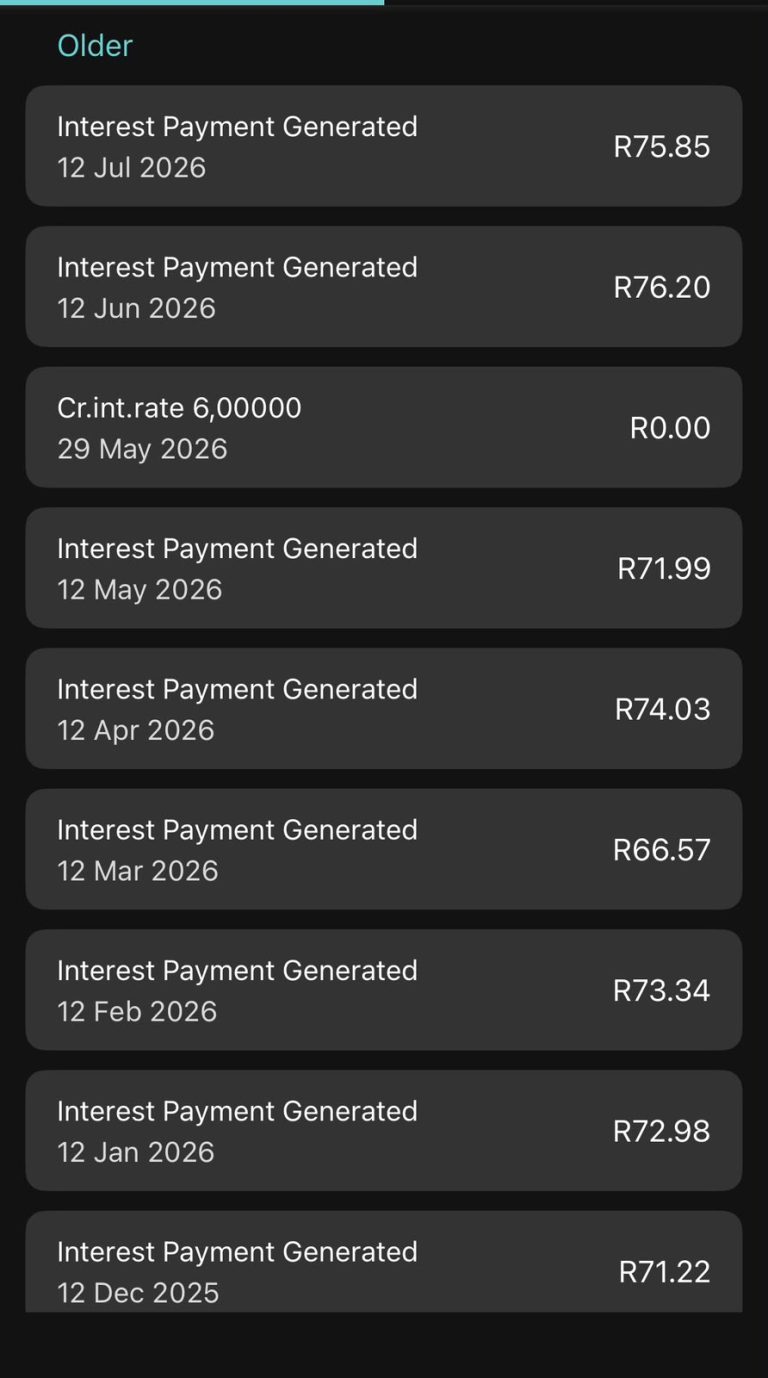
From my own experience, I started saving just R100 per month eight years ago. By remaining consistent, my savings have grown to over R10,000.00. Today, that balance earns me approximately R60-R70 in interest each month. While it may not seem like a significant amount, it demonstrates the power of disciplined saving and compound growth over time.
The most important step is simply to begin. Start with what you can afford, remain consistent, and allow time to work in your favour. Small, regular contributions can grow into meaningful financial security over the years.
6. Common Mistakes to Avoid
Avoid these common mistakes:
- Waiting until month-end to save.
- Trying to save too much too quickly.
- Keeping savings where they’re easy to access.
- Telling everyone about your savings.
- Borrowing from loan sharks.
- Giving up after one difficult month.
- Saving without a goal.
- Spending your emergency fund on non-essential items.
7. Troubleshooting
I can’t save R50.
Start with R10 or R20 instead.
I always spend my savings.
Move your money into a savings account or ask someone you trust to keep it for you.
My family wants to borrow my savings.
Keep your savings private and explain that it’s your emergency fund.
I had to use all my savings.
That’s okay. Simply start saving again next month.
I don’t have a bank account.
Use a secure envelope, locked container, or trusted stokvel until you’re able to open a savings account.
8. Helpful Tips and Best Practices
- Save immediately on payment day.
- Set realistic savings goals.
- Increase your savings gradually.
- Track your progress every month.
- Review your spending regularly.
- Avoid impulse buying.
- Compare prices before shopping.
- Buy only what you truly need.
- Keep your emergency fund separate.
- Celebrate small milestones.
9. Frequently Asked Questions
1. Can I really save money from a SASSA grant?
Yes. Even saving R20 every month can make a meaningful difference over time.
2. What if I can’t save every month?
Save whenever you can. Missing one month doesn’t mean you should stop.
3. Where is the safest place to keep my savings?
A bank savings account is generally the safest option.
4. Should I save or pay off debt first?
High-interest debt should usually be prioritised while still trying to build a small emergency fund.
5. Can I save using my SASSA card?
Your SASSA card is designed for receiving grant payments. Consider transferring money to a savings account or keeping it separately after withdrawing it.
6. How much should I save every month?
Save whatever you can comfortably afford. Even R20 is a great start.
7. What should I use my savings for?
Only genuine emergencies or important planned expenses.
8. How do I stop spending my savings?
Keep them somewhere that’s difficult to access and remember why you’re saving.
9. Should children learn to save too?
Yes. Teaching children to save early helps build lifelong financial habits.
10. What happens if I use my emergency savings?
Use it when necessary, then begin rebuilding it with your next grant payment.
10. Official Resources and References
For trusted information about grants, budgeting and financial services, consult:
- South African Social Security Agency (SASSA)
- Postbank
- National Treasury South Africa
- National Credit Regulator (NCR)
- Your registered South African bank or financial institution
11. Conclusion
Saving money while living on a SASSA grant isn’t easy, but it is possible. You don’t need to save hundreds of rand to improve your financial security. Building the habit of setting aside R20, R50, or R100 each month can provide a valuable safety net when unexpected expenses arise.
Start with an amount you can realistically afford, keep your savings separate from your everyday spending, and stay consistent. Over time, those small monthly contributions can grow into an emergency fund that gives you greater peace of mind and financial confidence.
Remember, every rand you save today is a rand that can help you tomorrow.
12. Disclaimer
This guide is provided for informational purposes only and is based on general financial guidance and practical saving strategies. It should not be considered personalised financial advice. Your financial circumstances are unique, so always make saving and budgeting decisions based on your individual needs. If you require professional financial advice, consult a qualified financial adviser or your banking institution.
This structure is well suited for SEO, follows Google’s Helpful Content and E-E-A-T guidelines, and is easy for readers to navigate.

.
About Pheto M
Pheto M is the founder and guide writer of HowToGuide.co.za, a practical information website created to help people find clear, useful and easy-to-understand guidance on everyday topics.
Pheto started HowToGuide.co.za after noticing a common problem: people often need help with important questions, applications, services and everyday decisions, but the information available online can be confusing, difficult to understand or scattered across different sources.
Pheto has experience and knowledge across several areas, including Business, Information Technology (IT), Education and Relationships. These areas have given her a practical understanding of different challenges people face in their personal, professional and everyday lives.
Today, she dedicates her time to researching, writing and updating practical guides designed to help readers understand information and take the right steps with greater confidence.
Her approach is simple: make complex information simple, confusing processes clear, and difficult situations easier to manage.
Through HowToGuide.co.za, Pheto aims to provide practical, accessible and helpful information that readers can use in their everyday lives.
Pheto values feedback from readers and is committed to continually improving the content on HowToGuide.co.za. If you have a question, suggestion, or would like to get in touch, you can email her at admin@howtoguide.co.za. She personally reviews reader feedback and aims to respond within 48 hours.
How to Save Money from Your SASSA Grant Every Month (2026)
July 21, 2026
Reading Time: 6 minutesLiving on a SASSA grant makes saving feel impossible, but even small amounts add up. Discover 10 practical ways to save R20 to R100 each month, protect your money from temptation, and build an emergency safety net.
How to Reverse Money on Capitec: Step-by-Step (2026)
July 16, 2026
Reading Time: 6 minutesMade a payment mistake on the Capitec App? While there isn’t a simple “undo” button for EFTs or transfers, recovering your funds is still possible. Learn when a transaction can be reversed, how to initiate an urgent payment recall, and step-by-step methods to secure your money quickly.
How to Check Your SASSA Status Online (2026)
July 7, 2026
Reading Time: 7 minutesNeed to track your SASSA application or check your payment date? From using the official online portal to quick WhatsApp, SMS, and USSD code methods, this comprehensive, step-by-step guide breaks down how to check your SASSA status in 2026—including what your status message means and the latest 2026/2027 grant payment schedules.
How to Claim UIF in South Africa (2026): A Complete Step-by-Step Guide
July 6, 2026
Reading Time: 7 minutesLost your job and need financial relief? Follow our complete, step-by-step guide to claiming your UIF in South Africa online or in person for 2026.
How to Open and Use FNB eWallet on WhatsApp (2026)
July 3, 2026
Reading Time: 6 minutesWant to use your mobile wallet directly on chat? Discover how to use FNB eWallet on WhatsApp to easily send, receive, and withdraw money across South Africa. This step-by-step guide covers mandatory registration details, instant cash out at retailers, low transactional fees, and crucial security tips.