
1. Introduction
Experiencing abuse can be frightening, confusing, and overwhelming. No one deserves to live in fear.
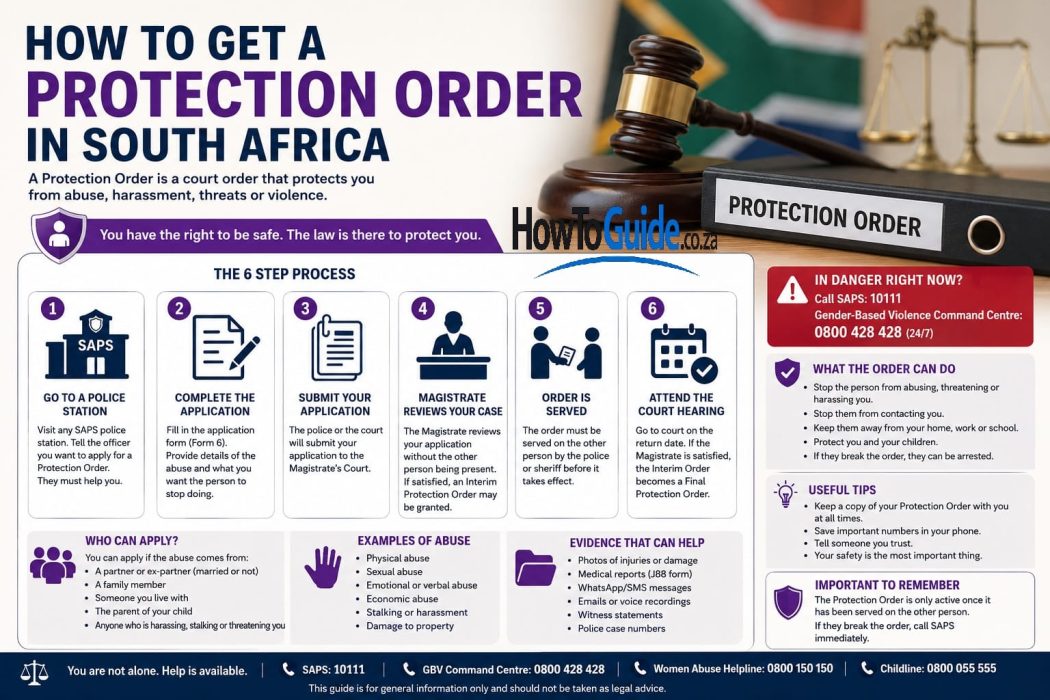
A Protection Order is a legal order issued by a Magistrate’s Court that tells an abusive person to stop harming, threatening, harassing, or intimidating you. It is one of the most important legal tools available to help protect victims of domestic violence and harassment in South Africa.
This guide explains, in simple English, who can apply, what documents you need, how the application process works, and what happens after a Protection Order is granted.
2. Who This Guide Is For
This guide is intended for:
- Victims of domestic violence
- People experiencing emotional, verbal, physical, sexual, or economic abuse
- Individuals being stalked or harassed
- Family members helping someone apply
- Community workers and victim support volunteers
- Anyone who wants to understand how Protection Orders work in South Africa
3. Requirements
You do not need a lawyer to apply for a Protection Order.
Before visiting the court or police station, try to gather as much information as possible.
Identification
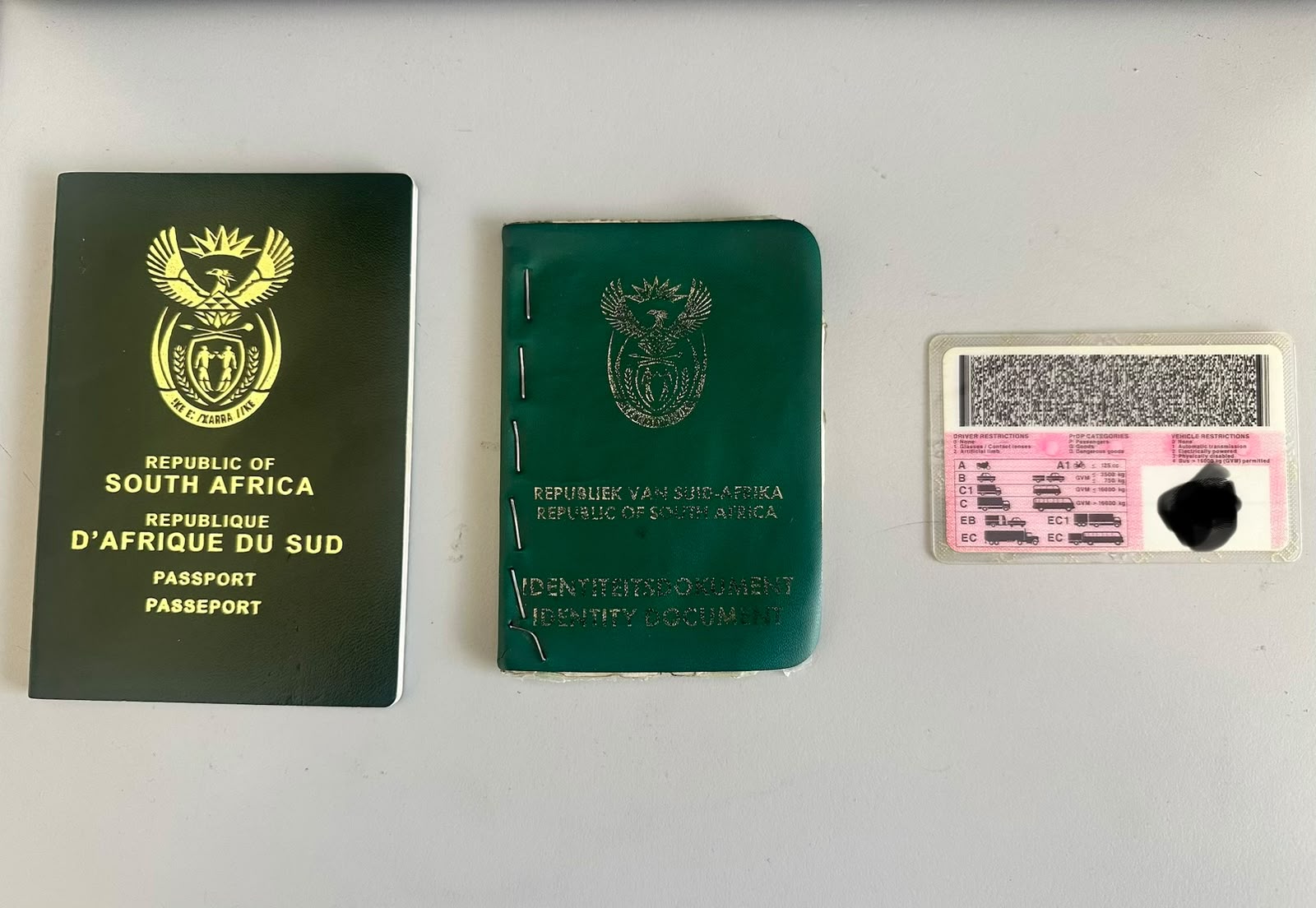
Bring any available identification, such as:
- South African ID
- Smart ID card
- Passport
- Driver’s licence
Foreign nationals may also apply using a passport or other valid identification.
Details of the Respondent
Try to provide:
- Full name
- Home address
- Work address
- Contact details (if known)
This helps SAPS or the Sheriff serve the Protection Order.
Supporting Evidence (If Available)
Although your sworn statement is evidence on its own, additional evidence may strengthen your application.
Examples include:
- Photos of injuries
- Photos of damaged property
- WhatsApp messages
- SMS messages
- Emails
- Medical reports (J88 Form)
- Witness statements
4. Step-by-Step Guide
Step 1: Go to a Police Station or Magistrate’s Court
Visit your nearest Magistrate’s Court or any SAPS station where you feel safe.
Police officers are legally required to assist victims of domestic violence.
Step 2: Complete Form 6
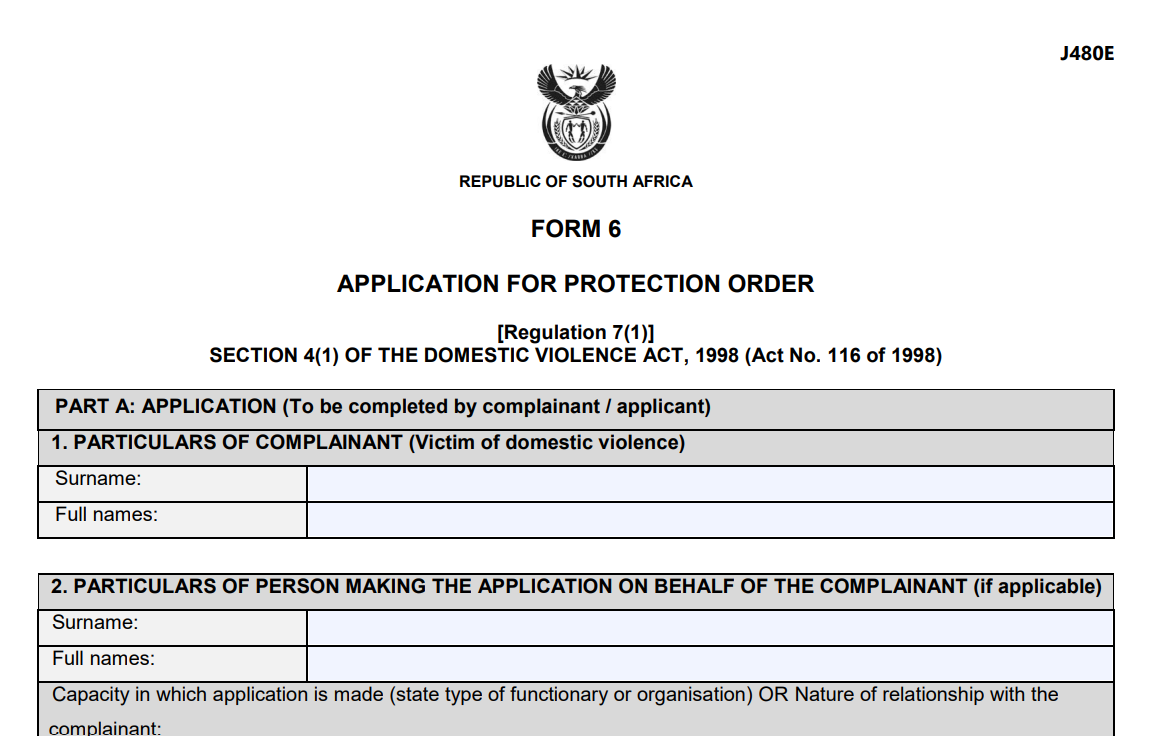
The Clerk of the Court will provide Form 6, the official Protection Order application.
When completing the form:
- Explain exactly what happened.
- Include dates, times, and places where possible.
- Clearly state what you want the respondent to stop doing.
Examples include:
- Contacting you
- Coming to your home
- Visiting your workplace
- Sending messages
- Threatening you
Step 3: Magistrate Reviews Your Application
The Magistrate reviews your application without the respondent being present.
If there is enough evidence that you need immediate protection, the Magistrate may issue an Interim Protection Order on the same day.
Step 4: The Order Is Served
The Protection Order only becomes enforceable after it has been officially served on the respondent.
This is normally done by:
- SAPS, or
- The Court Sheriff
Service usually takes place within approximately 24 hours, although this can vary depending on the circumstances.
Step 5: Attend the Return Date
Your Interim Protection Order will include a court date known as the Return Date.
If the respondent does not attend after being properly served, the court may grant a Final Protection Order.
If both parties attend, the Magistrate will hear both sides before making a decision.
Step 6: Keep Your Documents Safe
If your Protection Order is granted, the court also issues a Suspended Warrant of Arrest.
Keep copies of:
- Your Protection Order
- The Suspended Warrant of Arrest
Carry them with you whenever possible.
If the respondent breaks the order, present these documents to the police immediately.
5. My Experience and Practical Insights
After researching many South African government and legal processes, one thing stands out: many people delay seeking help because they believe they need a lawyer or extensive evidence before approaching the court.
In practice, this is not the case. Your sworn statement is an important piece of evidence, and court officials are there to guide you through the process.
If you are experiencing abuse, try not to wait until the situation becomes more serious. Applying for a Protection Order early can provide legal protection before the abuse escalates.
It is also helpful to keep a record of incidents, including dates, messages, photographs, or witness details where it is safe to do so. This information can support your application, but remember that you should never put yourself at further risk to collect evidence.
6. Common Mistakes to Avoid
Avoid these common mistakes:
- Waiting too long before seeking help
- Leaving important sections of Form 6 incomplete
- Giving incorrect or incomplete details about the respondent
- Forgetting your court date
- Not keeping copies of your Protection Order
- Ignoring breaches of the order
- Assuming only physical violence qualifies as abuse
- Thinking you must hire a lawyer before applying
7. Troubleshooting
I don’t know the respondent’s exact address.
Provide as much information as possible, including their workplace, family address, or places they regularly visit.
I have no physical injuries.
You can still qualify for protection if you are experiencing emotional, psychological, verbal, sexual, economic, or other forms of abuse recognised by law.
I missed my court date.
Contact the Magistrate’s Court as soon as possible to find out your next steps.
The respondent has not been served.
Follow up with the police station or the Clerk of the Court to check on the status of service.
The respondent ignored the Protection Order.
Go to the nearest police station immediately with your Protection Order and Suspended Warrant of Arrest.
8. Helpful Tips and Best Practices
To make the process easier:
- Apply as soon as possible if you feel unsafe.
- Be honest and detailed in your application.
- Keep copies of all court documents.
- Save evidence safely whenever possible.
- Tell a trusted friend or family member what is happening.
- Attend every court date.
- Save important emergency numbers in your phone.
- If your situation changes, inform the court.
9. Frequently Asked Questions
1. What is a Protection Order?
It is a court order requiring an abusive person to stop certain behaviour, such as violence, threats, harassment, or intimidation.
2. Can I apply without a lawyer?
Yes. A lawyer is not required.
3. Can I apply if I have no physical injuries?
Yes. Emotional, verbal, psychological, sexual, economic abuse, stalking, and harassment may also qualify.
4. How much does it cost?
Applying for a Protection Order is free.
5. How long does the process take?
An Interim Protection Order may be granted on the same day if the Magistrate believes there is immediate danger. A Final Protection Order is usually considered on the Return Date, typically within 2 to 8 weeks.
6. Can I apply online?
Electronic applications are legally permitted under recent amendments to the Domestic Violence Act. However, availability differs between Magistrates’ Courts. Contact your local court to confirm whether they accept applications by email and what their requirements are.
7. What happens if the respondent breaks the Protection Order?
Breaking a Protection Order is a criminal offence. Report the breach to SAPS immediately and provide your Protection Order and Suspended Warrant of Arrest.
8. Does a Final Protection Order expire?
No. A Final Protection Order remains in force until a court sets it aside.
9. Can someone from another province be served?
Yes. Protection Orders are enforceable throughout South Africa.
10. Can I apply if I am a foreign national?
Yes. Foreign nationals may apply using a passport or other valid identification.
10. Official Resources and References
South African Police Service (SAPS)
Emergency: 10111
Gender-Based Violence Command Centre
24-hour Helpline: 0800 428 428
Provides:
- Crisis counselling
- Emotional support
- Referrals to shelters
- Information on available services
Childline South Africa
0800 055 555
Provides confidential support for children and teenagers.
LifeLine South Africa
0861 322 322
Provides emotional support and crisis intervention.
Magistrate’s Courts
Applications for Protection Orders can be made at your nearest Magistrate’s Court.
11. Conclusion
A Protection Order can play a vital role in helping protect you from abuse, threats, harassment, or intimidation. The process is designed to be accessible, and you do not need a lawyer to apply.
If you believe you or someone you know is experiencing abuse, seek help as soon as possible. Support is available through the courts, the South African Police Service, and organisations that assist victims of violence.
Remember that every situation is different. If you are in immediate danger, contact the police without delay.
12. Disclaimer
This guide is provided for general informational purposes only and should not be regarded as legal advice. While every effort has been made to ensure the information is accurate, laws, procedures, and court practices may change over time.
If you require legal advice or assistance with your specific circumstances, contact your nearest Magistrate’s Court, a qualified legal practitioner, or a recognised victim support organisation. If you are in immediate danger, call the South African Police Service on 10111 without delay.

.
About Pheto M
Pheto M is the founder and guide writer of HowToGuide.co.za, a practical information website created to help people find clear, useful and easy-to-understand guidance on everyday topics.
Pheto started HowToGuide.co.za after noticing a common problem: people often need help with important questions, applications, services and everyday decisions, but the information available online can be confusing, difficult to understand or scattered across different sources.
Pheto has experience and knowledge across several areas, including Business, Information Technology (IT), Education and Relationships. These areas have given her a practical understanding of different challenges people face in their personal, professional and everyday lives.
Today, she dedicates her time to researching, writing and updating practical guides designed to help readers understand information and take the right steps with greater confidence.
Her approach is simple: make complex information simple, confusing processes clear, and difficult situations easier to manage.
Through HowToGuide.co.za, Pheto aims to provide practical, accessible and helpful information that readers can use in their everyday lives.
Pheto values feedback from readers and is committed to continually improving the content on HowToGuide.co.za. If you have a question, suggestion, or would like to get in touch, you can email her at admin@howtoguide.co.za. She personally reviews reader feedback and aims to respond within 48 hours.
10 Year Driving Licence South Africa: Which Codes Qualify 2026?
August 28, 2026
Reading Time: 8 minutesDiscover which driving licence codes (Code B, EB, A, A1) qualify for the proposed 10-year validity period in South Africa, who is excluded, and essential renewal rules.
How to Report a Water Outage in Ekurhuleni 2026
August 21, 2026
Reading Time: 11 minutesLearn how to report a water outage in Ekurhuleni using Siyakhokha, the service call centre, or the My CoE app. Follow this step-by-step guide to log your issue, get a reference number, and ensure a quick resolution.
How to Get a Protection Order at SAPS: A Complete, Easy-to-Follow Guide
July 11, 2026
Reading Time: 6 minutesNeed a protection order but don’t know where to start? Discover exactly how to apply for a protection order at SAPS or the Magistrate’s Court in South Africa. This simple, step-by-step guide covers mandatory forms, required evidence, timelines, and crucial safety rules to protect yourself today.
How to Apply for a South African Visa (2026)
July 4, 2026
Reading Time: 6 minutesPlanning a trip, move, or study journey to South Africa? This complete, step-by-step guide breaks down how to register for a South African visa, including the new super-fast ETA, standard eVisas, and required documents.
How to Apply for a Learner’s Licence in South Africa :Step-by-Step Guide
July 3, 2026
Reading Time: 9 minutesReady to take the first step toward driving? Discover how to apply for a learner’s licence in South Africa with this complete, step-by-step guide. Learn about licence codes, mandatory documents, booking via NaTIS, and how to pass the computerised K53 test on your first try.
How to Apply for a South African Passport (2026)
July 3, 2026
Reading Time: 6 minutesPlanning a trip abroad? Discover how to get a passport in South Africa with this easy, step-by-step guide. Learn how to skip the Home Affairs queues by applying online via eHomeAffairs, book bank biometric appointments, gather mandatory documents, and track your application status easily.