
Introduction
Getting your learner’s licence is one of the biggest milestones on your journey to becoming a licensed driver in South Africa. Whether your goal is to drive to work, travel independently, or prepare for a career that requires a driver’s licence, everything begins with obtaining a learner’s licence.
A learner’s licence proves that you understand the rules of the road, traffic signs, road markings, and the basic controls of a vehicle. It allows you to practise driving legally while being supervised by a qualified licensed driver.
In recent years, learner’s licence testing has become more modern. Many Driving Licence Testing Centres (DLTCs) have introduced the Computerised Learner’s Licence Testing (CLLT) system. Instead of answering paper-based questions, applicants now complete their tests on a computer. The new system helps improve fairness, reduces fraud, provides instant results, and creates a consistent testing experience.
Although the application process is straightforward, many people fail because they arrive without the correct documents, choose the wrong licence code, or underestimate the K53 examination. Proper preparation makes all the difference.
This comprehensive guide explains everything you need to know—from eligibility requirements and required documents to booking your test, preparing effectively, writing the examination, and receiving your learner’s licence.
Table of Contents
- Who This Guide Is For
- What Is a Learner’s Licence?
- Why You Need a Learner’s Licence
- Learner’s Licence Codes Explained
- Eligibility Requirements
- Documents Required
- Step 1: Choose the Correct Licence Code
- Step 2: Gather the Required Documents
- Step 3: Book Your Learner’s Licence Test
- Step 4: Prepare for the Learner’s Licence Test
- Step 5: Write the Learner’s Licence Test
- Step 6: Receive Your Learner’s Licence
- My Practical Insights
- Common Mistakes to Avoid
- Troubleshooting
- Helpful Tips
- Frequently Asked Questions
- Official Resources
- Conclusion
Who This Guide Is For
This guide is suitable for:
- First-time drivers applying for a learner’s licence.
- Teenagers preparing to obtain their first driving qualification.
- Adults applying for a learner’s licence later in life.
- South African citizens.
- Permanent residents.
- Foreign nationals legally residing in South Africa.
- Anyone planning to obtain a Code 1, Code 2, or Code 3 driving licence.
What Is a Learner’s Licence?
A learner’s licence is a legal document issued by the South African government that allows you to learn how to drive under supervision.
Road Rules Manual: https://www.natis.gov.za/images/learners/1_Rules_of_the_Road_v100_Jun_2012.pdf
Road Traffic Signs Manual: https://www.natis.gov.za/images/learners/2_Manual_on_Road_Traffic_Signs_v100_Jun_2012.pdf
Vehicle Control Manual: https://www.natis.gov.za/images/learners/3_Vehicle_Controls_Manual_v100_Jun_2012.pdf
It confirms that you understand:
- Rules of the road
- Road signs
- Road markings
- Vehicle controls
- Safe driving practices
A learner’s licence is not a driver’s licence.
It does not allow you to drive alone.
When driving, you must always comply with the conditions attached to your learner’s licence, including being accompanied by a suitably licensed driver where required.
Why You Need a Learner’s Licence
A learner’s licence is compulsory before applying for a practical driving test.
It serves several important purposes:
- Demonstrates your understanding of South African road laws.
- Allows supervised driving practice.
- Helps develop safe driving habits.
- Reduces accidents caused by inexperienced drivers.
- Prepares you for the practical K53 driving test.
Without a valid learner’s licence, you cannot legally book or complete your practical driving licence test.
Requirements
Before applying, make sure you meet the eligibility requirements.
Age Requirements
| Licence Code | Vehicle Type | Minimum Age |
|---|---|---|
| Code 1 | Motorcycle up to 125cc | 16 years |
| Code 2 | Light motor vehicles (less than 3,500 kg GVM) | 17 years |
| Code 3 | Heavy motor vehicles | 18 years |
Applicants must meet the minimum age requirement on the day they apply.
Required Documents
Prepare all documents before making your booking.
You may need:
- South African ID Book or Smart ID Card
- Valid passport and permit (foreign nationals)
- Two black-and-white ID photographs (where required by your DLTC)
- Proof of residential address
- Affidavit if proof of address is not in your name
- Ward councillor confirmation letter if living in an informal settlement
- Booking fee
- Completed LL1 Application Form
- Medical Certificate (MC) if you are 65 years or older
Some testing centres may request additional supporting documents, so always verify the requirements before your appointment.
Step 1: Choose the Correct Learner’s Licence Code
Choosing the correct learner’s licence code is extremely important.
Applying for the wrong code means you will have to start the process again.
Code 1

Suitable for motorcycles.
Examples include:
- Motorcycles
- Scooters
- Motorbikes up to 125cc
Minimum age:
16 years
Code 2

This is the most common learner’s licence.
It covers:
- Cars
- Bakkies
- SUVs
- Minibuses under the legal weight limit
Minimum age:
17 years
Most first-time drivers choose Code 2.
Code 3
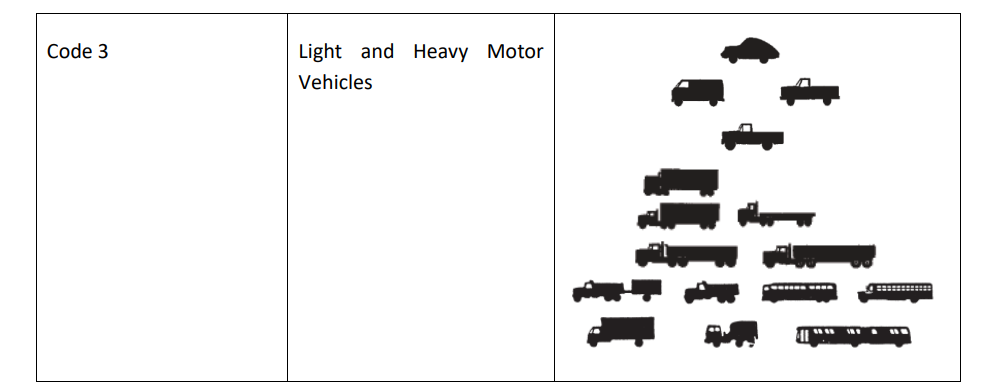
Required for heavy vehicles including:
- Trucks
- Large buses
- Heavy commercial vehicles
Minimum age:
18 years
Many professional drivers require this licence.
Step 2: Gather the Required Documents
Before booking, carefully prepare every document.
Identification
Bring your:
- Smart ID Card
- Green ID Book
Foreign nationals must provide:
- Passport
- Valid permit
- Proof of legal residence
Proof of Address
Examples include:
- Municipal account
- Utility bill
- Bank statement
- Lease agreement
If the document is not in your name, provide an affidavit explaining your residence.
Medical Certificate
Applicants aged 65 years and older must submit a completed Medical Certificate confirming they are medically fit to drive.
Photographs
Although many DLTCs capture digital photographs electronically, some still request printed passport photographs.
Confirm this beforehand.
Step 3: Book Your Learner’s Licence Test
Booking procedures differ slightly depending on your province.
Gauteng and Eastern Cape
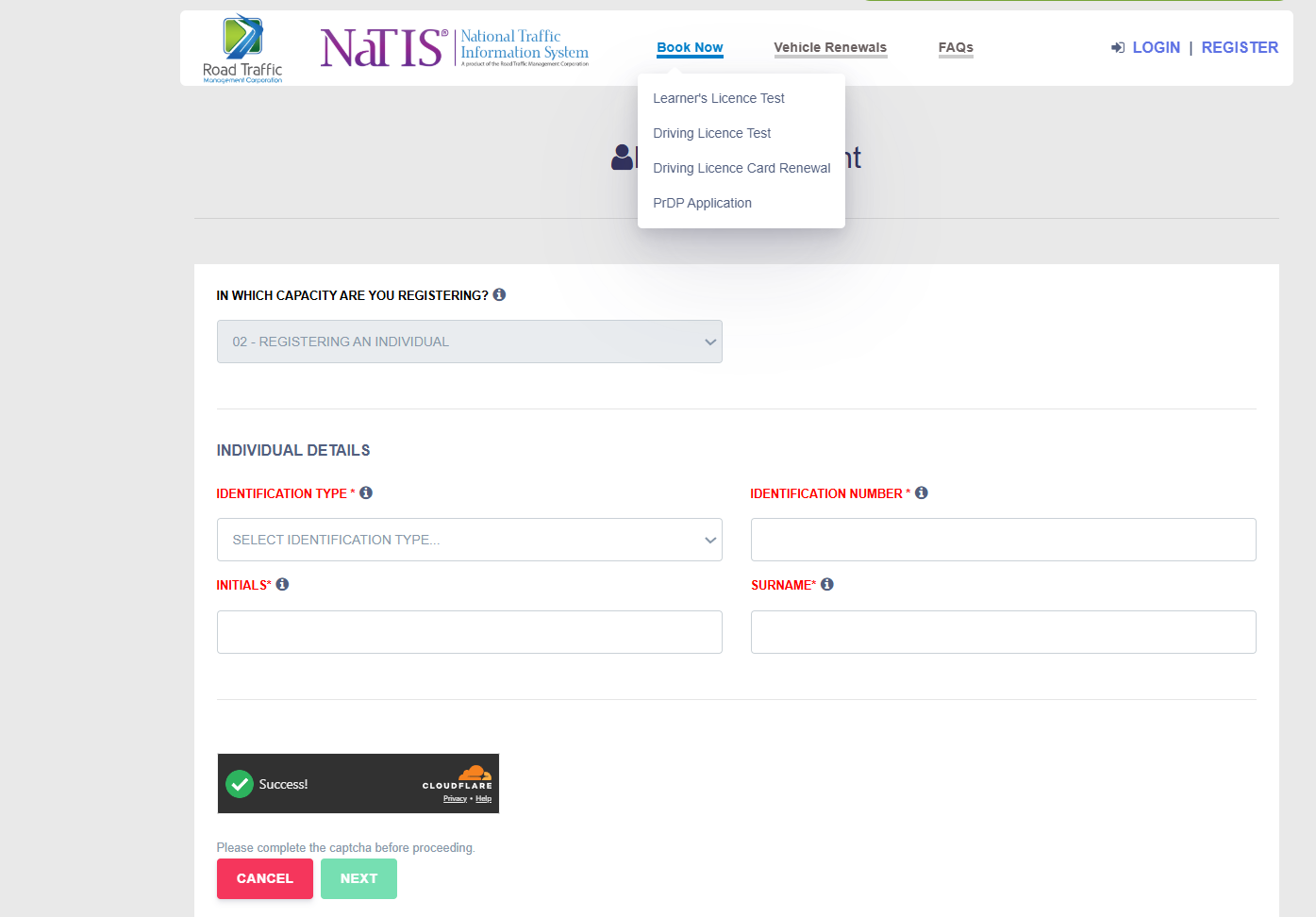
Many testing centres allow online booking through the National Traffic Information System (NaTIS).
Typical process:
- Create your NaTIS profile.
- Verify your email or cellphone.
- Log into your account.
- Select Learner’s Licence.
- Choose your licence code.
- Select your testing centre.
- Choose an available appointment.
- Pay the booking fee if required.
- Receive your booking confirmation.
Print or save your confirmation.
Western Cape
Many DLTCs use the Computerised Learner’s Licence Testing (CLLT) system.
Appointments may be booked online or through approved booking channels depending on your municipality.
Follow the instructions provided when selecting your testing centre.
Other Provinces
Many provinces still require applicants to visit the nearest DLTC.
Typical process:
- Complete the LL1 form.
- Submit supporting documents.
- Pay the booking fee.
- Receive a test date.
Booking availability varies between testing centres.
Step 4: Prepare for the Learner’s Licence Test
Preparation is the biggest factor determining whether you pass or fail.
Avoid simply memorising answers.
Instead, understand the road rules.
Study the K53 Manual
The K53 manual explains:
- Road signs
- Traffic rules
- Road markings
- Vehicle controls
- Defensive driving principles
Read it several times.
Practise Online Tests
Practice examinations help you:
- Become familiar with question styles.
- Improve speed.
- Identify weak areas.
- Build confidence.
Computerised Testing
Many DLTCs now use computer-based examinations.
Benefits include:
- Easy navigation
- Multiple-choice questions
- Instant results
- Reduced fraud
Even if you are unfamiliar with computers, the system is generally straightforward.
Subjects Covered
The learner’s licence examination covers three main sections:
Traffic Rules
Topics include:
- Speed limits
- Right of way
- Parking rules
- Overtaking
- Road safety
Traffic Signs
You must recognise:
- Regulatory signs
- Warning signs
- Information signs
- Temporary signs
Vehicle Controls
Questions cover:
- Dashboard warning lights
- Steering
- Braking
- Clutch
- Gear selection
- Basic vehicle safety checks
Number of Questions
The computerised examination consists of:
64 multiple-choice questions
Pass Marks
Applicants must pass each section individually.
Minimum scores:
- Traffic Rules: 22 out of 28
- Traffic Signs: 23 out of 28
- Vehicle Controls: 6 out of 8
Failing one section means failing the examination.
Languages
Most testing centres offer several official South African languages.
Check available languages when booking.
Eye Test
An eyesight test is compulsory.
If you wear glasses or contact lenses, bring them with you.
Alternatively, some DLTCs accept a certificate from a registered optometrist.
Step 5: Write the Learner’s Licence Test
On the day of your appointment:
Arrive at least 30 minutes early.
Bring:
- Identification
- Booking confirmation
- Proof of payment
- Any additional required documents
Your visit usually follows this order:
- Document verification.
- Eye test.
- Fingerprint verification (where applicable).
- Computerised learner’s licence examination.
- Results.
Many centres issue results immediately after the examination.
If successful, you proceed with the issuing process.
Step 6: Receive Your Learner’s Licence
After passing:
- Pay the issuing fee.
- Verify your personal details.
- Receive your learner’s licence.
Some centres issue the licence immediately.
Others may require collection later.
Validity
A learner’s licence remains valid for:
24 months
It cannot be renewed or extended.
Driving Conditions
You must:
- Comply with learner licence conditions.
- Drive responsibly.
- Practise regularly.
- Be supervised by an appropriately licensed driver where required.
Driving outside the licence conditions is illegal.
If Your Learner’s Licence Expires
Once expired:
- It becomes invalid.
- You cannot legally drive using it.
- You must apply for a new learner’s licence and pass the test again before booking a practical driving test.
My Practical Insights
After reviewing the learner’s licence application process and observing how applicants prepare for the examination, several practical lessons become clear.
The people who pass on their first attempt are rarely the luckiest—they are usually the best prepared. They spend time understanding why road rules exist instead of simply memorising answers from practice tests. This deeper understanding makes it easier to answer questions that are presented differently during the actual examination.
Organisation also plays a major role. Having all your documents ready before booking your appointment can prevent unnecessary delays and repeat visits to the DLTC. It is worth checking document requirements a few days before your appointment to ensure nothing has changed.
Booking availability can sometimes be limited, especially during school holidays and busy periods. If no appointments are available online, check the booking system regularly or contact your nearest DLTC, as cancellations and additional appointment slots may become available.
Finally, remember that obtaining your learner’s licence is only the beginning. Use the 24-month validity period wisely by practising regularly with a qualified supervising driver and preparing thoroughly for your practical driving test.
Common Mistakes to Avoid
Avoid these common mistakes:
- Choosing the wrong licence code.
- Bringing expired or invalid identification.
- Forgetting proof of address.
- Submitting incomplete application forms.
- Arriving late for your appointment.
- Studying only practice questions instead of the K53 manual.
- Ignoring vehicle controls during revision.
- Assuming every learner’s test contains identical questions.
- Forgetting your prescribed glasses or contact lenses for the eye test.
- Allowing your learner’s licence to expire before booking your practical driving test.
Troubleshooting
I cannot find an appointment
Appointment availability may vary depending on demand. Check the booking portal regularly, especially early in the morning, or contact your local DLTC to enquire about cancellations or newly released dates.
My ID details do not match
Ensure that your personal information matches your official identification documents before completing your booking. Any discrepancies should be corrected before your appointment.
I failed the learner’s licence test
If you do not pass the examination, you may book another test after paying the applicable fee. Use the opportunity to review the sections where you lost marks and continue studying the K53 manual.
My proof of address is not in my name
Provide an affidavit together with the proof of address explaining your place of residence. Some DLTCs may also request additional supporting documentation.
I wear glasses
Bring your glasses or contact lenses for the compulsory eye test. If accepted by your DLTC, you may also present a valid certificate from a registered optometrist.
Helpful Tips and Best Practices
- Study consistently instead of cramming the night before.
- Read the K53 manual from beginning to end.
- Complete several practice tests.
- Learn the meaning of every road sign.
- Understand vehicle controls instead of memorising answers.
- Double-check every document before your appointment.
- Arrive at least 30 minutes early.
- Keep copies of your booking confirmation and proof of payment.
- Book your practical driving test well before your learner’s licence expires.
Frequently Asked Questions
1. How long is a learner’s licence valid?
A learner’s licence is valid for 24 months from the date of issue. It cannot be renewed or extended.
2. Can I drive alone?
No. You may only drive in accordance with the conditions of your learner’s licence, including supervision requirements where applicable.
3. Can I book online?
Yes. Online booking is available in Gauteng and the Eastern Cape through the NaTIS system, while procedures may differ in other provinces.
4. How many questions are in the learner’s licence test?
The computerised learner’s licence examination consists of 64 multiple-choice questions.
5. What is the pass mark?
You must achieve the minimum required score in each section:
- Traffic Rules: 22/28
- Traffic Signs: 23/28
- Vehicle Controls: 6/8
6. What happens if I fail?
You may book another learner’s licence test after paying the required fee.
7. Can foreign nationals apply?
Yes. Foreign nationals who are legally residing in South Africa may apply, provided they submit valid identification and immigration documentation.
8. Do I need an eye test?
Yes. An eyesight test is compulsory unless your DLTC accepts a valid certificate from a registered optometrist.
Official Resources and References
For the latest information, consult:
- The South African Department responsible for transport.
- The Road Traffic Management Corporation (RTMC).
- The National Traffic Information System (NaTIS).
- The official K53 Learner Driver Manual.
- Your nearest Driving Licence Testing Centre (DLTC).
Conclusion
Obtaining a learner’s licence is the essential first step towards becoming a safe, confident, and legally licensed driver in South Africa. By selecting the correct licence code, gathering the required documents, booking your test in advance, and studying the K53 manual thoroughly, you can greatly improve your chances of passing the learner’s licence examination on your first attempt.
Although booking procedures and testing methods may differ slightly between provinces, the overall process remains straightforward when you prepare properly. Focus on understanding the rules of the road rather than memorising answers, arrive prepared on the day of your appointment, and use the 24-month validity period to gain valuable supervised driving experience before attempting your practical driving test.
With good preparation, patience, and regular practice, you’ll be well on your way to earning your full South African driver’s licence.
Disclaimer
Disclaimer: This guide is provided for informational purposes only. While every effort has been made to ensure the accuracy of the information, application requirements, fees, booking systems, testing procedures, and provincial processes may change without notice. Always verify the latest requirements with the relevant South African transport authorities, the National Traffic Information System (NaTIS), the Road Traffic Management Corporation (RTMC), or your nearest Driving Licence Testing Centre (DLTC) before submitting your application.

.
About Pheto M
Pheto M is the founder and guide writer of HowToGuide.co.za, a practical information website created to help people find clear, useful and easy-to-understand guidance on everyday topics.
Pheto started HowToGuide.co.za after noticing a common problem: people often need help with important questions, applications, services and everyday decisions, but the information available online can be confusing, difficult to understand or scattered across different sources.
Pheto has experience and knowledge across several areas, including Business, Information Technology (IT), Education and Relationships. These areas have given her a practical understanding of different challenges people face in their personal, professional and everyday lives.
Today, she dedicates her time to researching, writing and updating practical guides designed to help readers understand information and take the right steps with greater confidence.
Her approach is simple: make complex information simple, confusing processes clear, and difficult situations easier to manage.
Through HowToGuide.co.za, Pheto aims to provide practical, accessible and helpful information that readers can use in their everyday lives.
Pheto values feedback from readers and is committed to continually improving the content on HowToGuide.co.za. If you have a question, suggestion, or would like to get in touch, you can email her at admin@howtoguide.co.za. She personally reviews reader feedback and aims to respond within 48 hours.
10 Year Driving Licence South Africa: Which Codes Qualify 2026?
August 28, 2026
Reading Time: 8 minutesDiscover which driving licence codes (Code B, EB, A, A1) qualify for the proposed 10-year validity period in South Africa, who is excluded, and essential renewal rules.
How to Report a Water Outage in Ekurhuleni 2026
August 21, 2026
Reading Time: 11 minutesLearn how to report a water outage in Ekurhuleni using Siyakhokha, the service call centre, or the My CoE app. Follow this step-by-step guide to log your issue, get a reference number, and ensure a quick resolution.
How to Get a Protection Order at SAPS: A Complete, Easy-to-Follow Guide
July 11, 2026
Reading Time: 6 minutesNeed a protection order but don’t know where to start? Discover exactly how to apply for a protection order at SAPS or the Magistrate’s Court in South Africa. This simple, step-by-step guide covers mandatory forms, required evidence, timelines, and crucial safety rules to protect yourself today.
How to Apply for a South African Visa (2026)
July 4, 2026
Reading Time: 6 minutesPlanning a trip, move, or study journey to South Africa? This complete, step-by-step guide breaks down how to register for a South African visa, including the new super-fast ETA, standard eVisas, and required documents.
How to Apply for a Learner’s Licence in South Africa :Step-by-Step Guide
July 3, 2026
Reading Time: 9 minutesReady to take the first step toward driving? Discover how to apply for a learner’s licence in South Africa with this complete, step-by-step guide. Learn about licence codes, mandatory documents, booking via NaTIS, and how to pass the computerised K53 test on your first try.
How to Apply for a South African Passport (2026)
July 3, 2026
Reading Time: 6 minutesPlanning a trip abroad? Discover how to get a passport in South Africa with this easy, step-by-step guide. Learn how to skip the Home Affairs queues by applying online via eHomeAffairs, book bank biometric appointments, gather mandatory documents, and track your application status easily.